Know what your channels are saying, without reading them all.
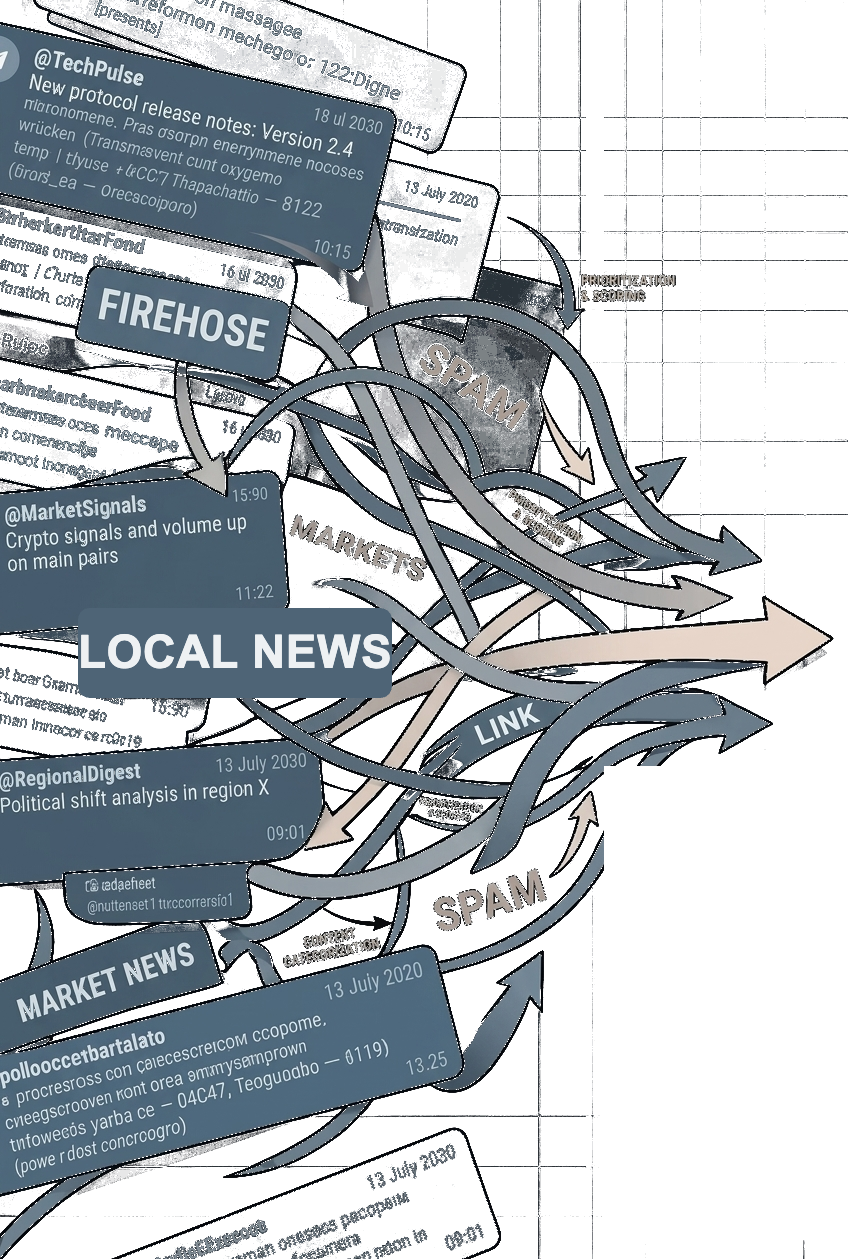
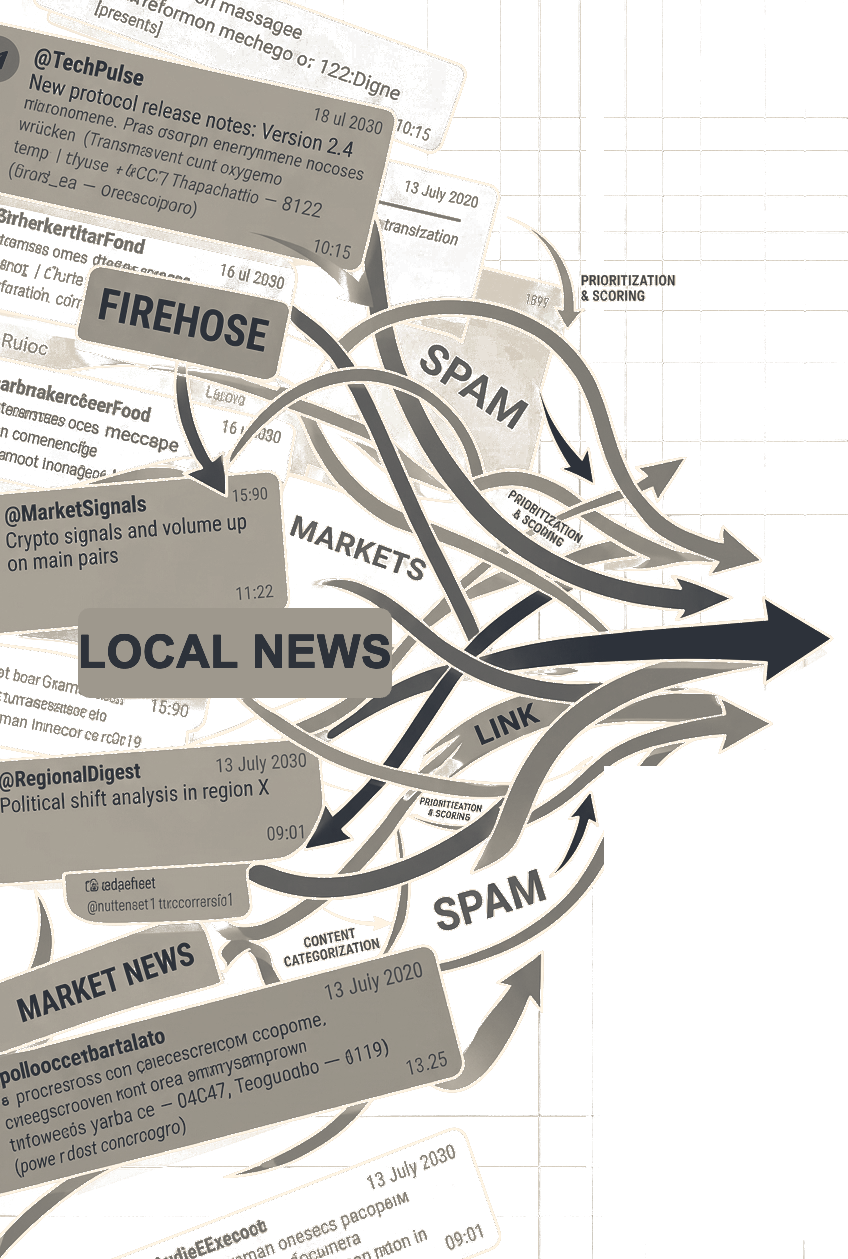
Peak News reads the public channels you pick and sends one briefing: grouped by topic, in your language, every point linked to its sources. Analytics show what changes over time, and how.
Start free, no card. Build a plan that fits when you are ready.
How it works
Choose the channels
Add public channels by @handle, without following them first, and group them into a subscription.
Merged across channels
Every post in the period is read, de-duplicated across channels and grouped into topics. Noise and reposts are dropped. What is left is written in your language, whatever the channels use.
Read your briefing
Every day. Each point carries its sources, so any original post is one tap away.
See what changes
The analytics build up day by day. Statistics show which subjects rise and fade, Topic coverage how the channels regard them, and Connections how one event leads to the next.
What it's for
Want to know what your competitors are up to?
Put the public channels of your competitors, rivals and peers into one subscription. Every day, the briefing sums up what they announced, launched and changed, grouped by topic rather than by account, with every point linked to the posts behind it. Statistics show which subjects dominate their posts, and when one rises or fades.
Following more channels than anyone could read?
Dozens of channels post all day, and most of them repeat each other. Add them all to a subscription and read one briefing instead: a story that ran in eight channels or eighty appears once, with links to every post behind it, and noise and reposts are left out.
What is going on in your city?
Roadworks, power cuts, council notices, what is on this weekend. Put the council, the transport operator and the neighbourhood channels into one daily subscription, and what they posted arrives as a single briefing, photos included. Pass it on to a neighbour with a link that opens without an account.
Channels in a language you do not read?
Follow channels in any language, or mix several in one subscription: Chinese, German and English side by side. The briefing is written in the language set for your account, not translated post by post, and the same announcement in two languages becomes one point. Every point still links to the original post.
What did your channels say while you were busy?
Nobody scrolls back through a thousand messages; most people give up instead. Each day arrives as one briefing, with an email when it is ready, and every earlier briefing stays readable. Back after a few days away, read the briefings you missed instead of the backlog.
Run as many subscriptions as you like, side by side.
Keep each interest apart: competitors in one subscription, your city in another, each with its own channels and its own briefing. Any briefing can be passed on with a link that works without an account.
Statistics
In a briefing you read what the channels said. Statistics show what they keep coming back to: which subjects are gaining ground, and which are fading.
Each post is assigned its subject automatically. The statistics are built from the posts of the channels a subscription holds.
Topic coverage
A briefing says what happened. Topic coverage shows how the channels regard it: who and what they praise or blame, when that changes, and where they disagree.
Every post is read for who or what it is about, and whether it praises, criticises or simply reports. It is a reading of the posts, not a fact check. Topic coverage is part of Statistics.
Connections
A briefing covers one day, but most stories run longer. Connections follow them across the week: what came of an earlier event, what set one off, and where two accounts disagree.
Events are linked automatically, and every link says how sure it is: stated in the posts, inferred from them, or only possible. Choose an event to see its whole chain across the week.